
By Sam Eady, Head of Research at Wrapped Agency
Alt text, short for alternative text, is a short description added to an image so that people using screen readers can understand its purpose or content. It can also appear if an image fails to load.
Alt text matters because it helps more people access and understand digital content. If an image contains useful information, supports a message, or helps someone complete an action, then that information should not be lost to users who cannot see it.
It is also an important part of following accessibility guidelines, helping make image-based content more accessible to people using screen readers.
When do you need alt text?
Alt text is needed when an image adds meaning, information, or function to a webpage or digital content.
This includes:
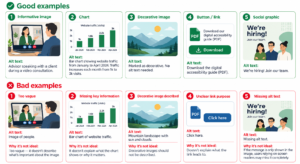
- charts, graphs, and diagrams
- screenshots
- icons that communicate meaning
- images used as buttons or links
- social graphics with important text
In these cases, the alt text should describe what matters about the image in that specific context, rather than trying to describe every visual detail. For more complex visuals, such as charts or diagrams, a short alt text description may also need supporting explanation in the surrounding content.
For example, if a healthcare website includes a chart showing how patient satisfaction has improved, alt text such as “Patient satisfaction increased from 75% to 90% between 2024 and 2026” is more useful than “Graph showing patient satisfaction”. It communicates the information the image is intended to convey, rather than simply describing its appearance.
In most content management systems and digital platforms, alt text can usually be added in a simple, clearly labelled field when you upload or edit an image.
When is alt text not needed?
Not every image needs a description. If an image is purely decorative and adds no important meaning, it does not usually need descriptive alt text. In those cases, it is often better to mark it as decorative so screen readers can ignore it.
A simple way to think about it is: if the image disappeared, would the user miss anything important? If the answer is yes, it likely needs alt text.
A small detail that makes a big difference
Accessibility is particularly important in sectors such as healthcare, financial services, fintech, property and charities, where people often rely on digital content to make important decisions. Whether it’s a healthcare website explaining treatment options, a financial services provider presenting information in a chart, or a charity communicating the impact of its work, meaningful alt text helps ensure important information is available to people using screen readers. It’s a small but essential consideration in creating inclusive websites and digital experiences.
Alt text may seem like a small part of accessibility, but it can make a big difference to how inclusive digital content really is.
When used well, it helps make sure important visual information is accessible to more people across websites, emails, PDFs, social content, and other digital materials.
If you would like further guidance on creating more accessible and user-friendly digital content, the team at Wrapped Agency can help.